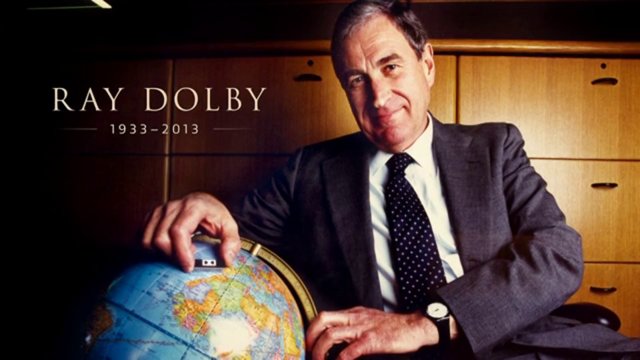
Engineer to Billionaire: The Life and Achievements of Ray Dolby
In the annals of technological innovation, few names resonate with the same clarity and universal recognition as Ray Dolby. A visionary engineer, astute entrepreneur, and prolific inventor, Dolby's contributions fundamentally reshaped our relationship with sound, from the silver screen to our living rooms. His genius wasn't just in inventing; it was in creating widely adopted standards that elevated the quality of audio experiences for billions worldwide. This remarkable journey culminated in an impressive financial legacy, with Ray Dolby's net worth estimated at an astounding $2.3 to $2.4 billion as of March 2013, a testament to the profound impact of his work.
This article delves into the life and achievements of the man behind the iconic sound, exploring his early beginnings, the groundbreaking inventions that defined his career, and the entrepreneurial spirit that transformed an engineering marvel into a global empire.
The Genesis of a Genius: Early Life and Education
Ray Milton Dolby was born on January 18, 1933, in Portland, Oregon, though he spent his formative years growing up in the vibrant city of San Francisco, California. From a young age, Dolby displayed a keen intellect and a burgeoning interest in the mechanics of sound and electronics, foreshadowing the path he would forge.
His academic journey began at Stanford University, where he pursued a Bachelor's degree in Electrical Engineering. This period was more than just theoretical learning; it was a crucible of practical application. During his time at Stanford, Dolby immersed himself in cutting-edge projects, notably working on prototypes for video recorder cassettes. He collaborated with pioneers like Charlie Ginsburg and Alexander M. Poniatoff at Ampex, a role that placed him at the very forefront of developing technology that would eventually give birth to the home video revolution. This early exposure to complex challenges and innovative solutions laid a crucial foundation for his future endeavors.
Demonstrating an insatiable thirst for knowledge, Dolby's academic pursuits continued across the Atlantic. In 1961, he earned the prestigious Marshall Scholarship, which enabled him to pursue postgraduate studies at the University of Cambridge. Here, he delved into Physics, earning his PhD. This interdisciplinary education – combining electrical engineering with a deep understanding of physics – equipped him with a unique perspective, allowing him to approach technical problems with both practical ingenuity and a profound grasp of underlying scientific principles.
Before launching his entrepreneurial career, Dolby further broadened his horizons by serving as a technical advisor for the United Nations organization in India. This international experience, spanning until 1965, provided him with invaluable insights into diverse technical challenges and practical applications of technology in real-world scenarios, preparing him for the global reach his future company would achieve.
Pioneering Sound: The Birth of Dolby Laboratories and Revolutionary Inventions
Armed with a formidable education and diverse practical experience, Ray Dolby returned to England in 1965, a year that would forever change the landscape of audio technology. It was here that he founded Dolby Laboratories, a company destined to become synonymous with superior sound quality.
Almost immediately, Dolby Laboratories began making waves. The same year of its founding, Ray Dolby succeeded in inventing the revolutionary Dolby Sound System. Central to this system was the groundbreaking Dolby NR (Noise Reduction) technology. Prior to Dolby NR, audio recordings, particularly on magnetic tape, were plagued by an inherent hiss or background noise, which compromised clarity and dynamic range. Dolby NR ingeniously tackled this problem by dynamically adjusting signal levels during recording and playback, effectively "hiding" the noise floor without sacrificing audio fidelity. This invention was nothing short of transformative for the music recording industry, film production, and eventually, consumer audio.
The impact of Dolby NR cannot be overstated. It allowed for cleaner, more vibrant recordings, preserving the subtle nuances and dynamic range of music and dialogue that were previously lost to noise. This technological leap wasn't just an improvement; it was a fundamental shift that enabled higher quality sound experiences across various mediums. Beyond noise reduction, Dolby's work evolved into comprehensive sound systems that enhanced the cinematic experience, introducing technologies that allowed filmmakers to deliver more immersive and powerful audio to audiences worldwide. To delve deeper into this incredible journey of innovation, learn more about From Dolby NR to Billions: The Inventive Legacy of Ray Dolby.
A Legacy of Innovation: Awards, Recognition, and Impact
Ray Dolby's relentless pursuit of audio perfection did not go unnoticed. Throughout his illustrious career, he garnered an impressive array of awards and recognitions from some of the most prestigious bodies in science, technology, and entertainment. These accolades underscore the breadth and depth of his impact, cementing his status as one of the most significant inventors of his time.
His impressive list of honors includes:
- AES Silver Medal (1971): An early recognition of his contributions to audio engineering.
- SMPTE Progress Medal (1983) & Alexander M. Poniatoff Gold Medal (1985): Acknowledging his pioneering work in motion picture and television engineering, particularly relevant given his early contributions to videotape recording.
- 61st Academy Awards — Academy Award, Scientific or Technical (1989): A testament to his profound influence on the film industry, recognizing the technical brilliance that elevated cinematic sound.
- Special Merit/Technical Grammy Award (1995): Highlighting his revolutionary impact on the music recording and playback landscape.
- IEEE Masaru Ibuka Consumer Electronics Award (1997): Celebrating his contributions to consumer electronics, bringing high-quality sound to homes globally.
- U.S. National Medal of Technology (1997): One of the highest honors bestowed by the United States government for technological innovation.
- Charles F. Jenkins Lifetime Achievement Award by the Academy of Television Arts and Sciences (2003): Recognizing his enduring legacy and career-long contributions to television.
- IEEE Edison Medal (2010): A highly prestigious award honoring a career of meritorious achievement in electrical engineering.
Beyond these individual awards, Ray Dolby was also recognized with honorary titles, such as being named an Officer of the British Empire in 1986. In 2004, his immense contributions were further immortalized with his induction into both the Consumer Electronics Hall of Fame and the National Inventors Hall of Fame. These distinctions collectively paint a vivid picture of an inventor whose work transcended industries, touched countless lives, and set new benchmarks for technological excellence.
Beyond the Blueprint: Understanding Ray Dolby's Billion-Dollar Vision
The story of Ray Dolby is not just one of brilliant invention; it is also a compelling narrative of entrepreneurship and strategic business acumen. His substantial Ray Dolby net worth, estimated between $2.3 and $2.4 billion, wasn't solely accumulated through patents, but through the successful establishment and growth of Dolby Laboratories into a global powerhouse.
Dolby understood that an invention, no matter how revolutionary, needed a viable commercial pathway to truly make an impact and generate sustained value. He didn't just invent Dolby NR; he built a company that meticulously developed, licensed, and implemented his technologies across various industries. This involved:
- Strategic Licensing: Instead of manufacturing all products himself, Dolby Laboratories focused on licensing its technologies to other manufacturers in the film, music, and consumer electronics industries. This allowed for widespread adoption and created a robust revenue stream.
- Setting Industry Standards: Dolby's technologies often became the de facto standard, particularly in film production and home theater systems. This standardization created a massive market for his innovations.
- Continuous Innovation: While Ray Dolby provided the foundational inventions, Dolby Laboratories continued to innovate, adapting and expanding its sound technologies to new formats and platforms, ensuring long-term relevance and growth.
- Global Reach: From its inception in England, Dolby Laboratories quickly established a global presence, ensuring that its technologies were available and integrated into products worldwide.
The financial success of Ray Dolby serves as a powerful testament to the value of combining technical brilliance with astute business strategy. For aspiring inventors and entrepreneurs, his journey offers a crucial lesson: true wealth and lasting impact often come from not just creating something new, but from successfully bringing that innovation to the global marketplace and making it an indispensable part of people's lives. To understand the intricate details of his financial achievements, delve deeper into Ray Dolby's $2.4 Billion Fortune: Pioneer of Dolby Sound Technology.
The Enduring Echo: Ray Dolby's Lasting Influence on Media
Ray Dolby's influence extends far beyond the impressive figure of his personal wealth or the numerous awards adorning his shelf. His true legacy lies in the ubiquitous presence of "Dolby Sound" in our daily lives. From the thunderous roar of a blockbuster movie to the pristine clarity of a music album, the underlying principles and technologies he pioneered continue to shape our auditory experiences.
His inventions didn't just improve sound; they enabled new forms of artistic expression and immersive entertainment. Filmmakers could craft more intricate soundscapes, musicians could achieve greater fidelity in their recordings, and consumers could enjoy a richer, more engaging experience at home. The foundation Ray Dolby laid allowed Dolby Laboratories to evolve and introduce further innovations, such as Dolby Atmos and Dolby Vision (though developed after his direct involvement), which continue to push the boundaries of audio and visual immersion, building upon his original commitment to excellence.
Ray Dolby, who passed away in 2013, left behind a wife, Dagmar, and two children, David and Tom, alongside an enduring corporate entity and a scientific heritage that continues to inspire. His life is a powerful narrative of how a single individual, driven by curiosity, intellect, and an unwavering commitment to quality, can fundamentally transform industries and enrich the human experience. His innovations are not just technical marvels; they are cornerstones of modern entertainment, ensuring that the sound of progress continues to echo for generations to come.
Conclusion
Ray Dolby's journey from an ambitious electrical engineering student to a billionaire entrepreneur is a powerful testament to the transformative power of innovation. His genius in developing technologies like Dolby NR and the Dolby Sound System revolutionized audio recording and playback, setting new global standards for sound quality. The remarkable Ray Dolby net worth of over $2 billion stands not merely as a measure of personal wealth, but as a tangible representation of the immense value his inventions and entrepreneurial spirit brought to the world. His legacy is etched into every clean audio track, every immersive cinematic experience, and every home theater system that proudly displays the Dolby logo, ensuring his profound impact will resonate for centuries to come.
