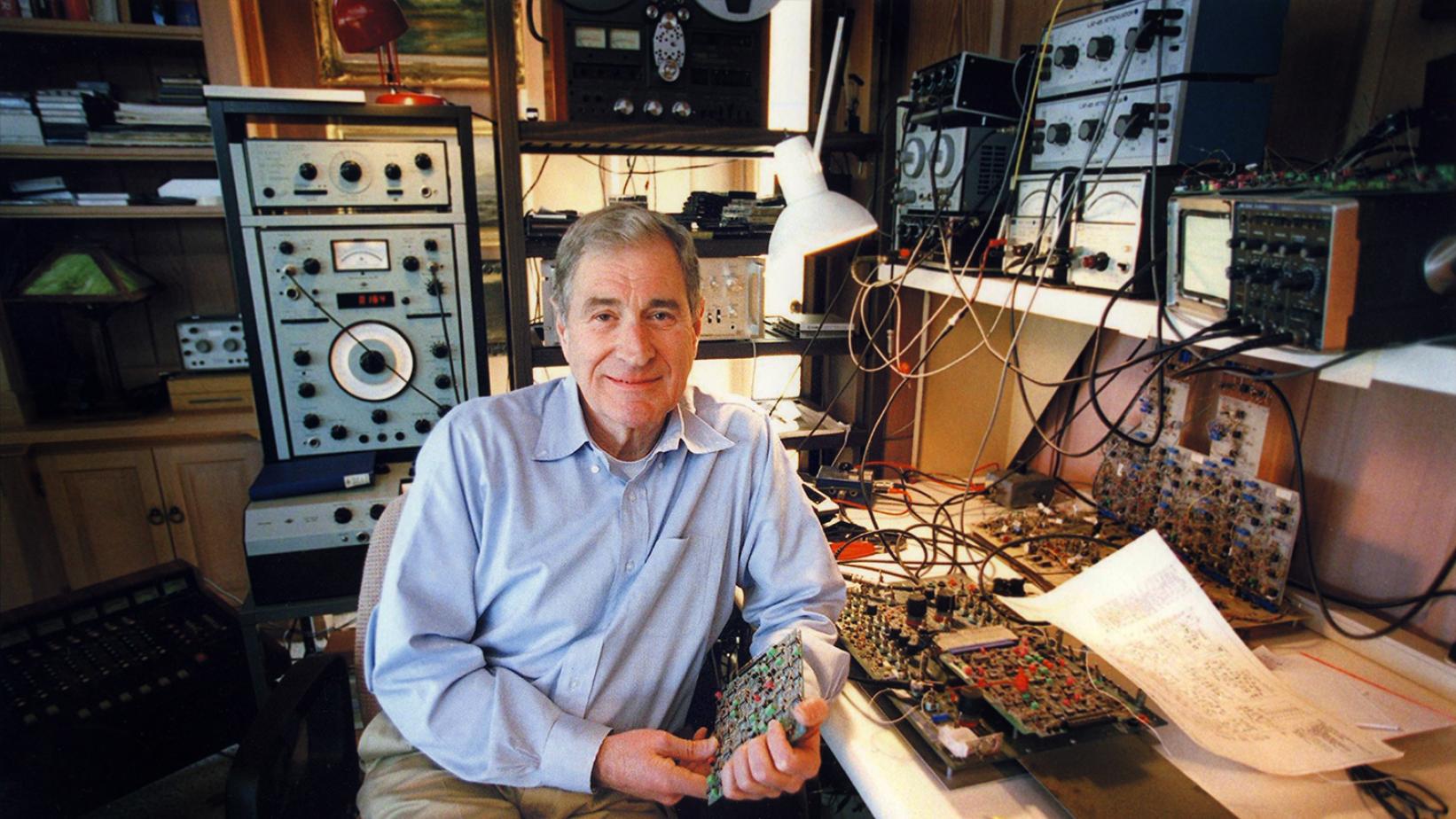
Ray Dolby's Billion-Dollar Symphony: A Legacy of Sound and Innovation
In the vast landscape of technological pioneers, few names resonate as profoundly as Ray Dolby. An American engineer, inventor, and entrepreneur, Dolby didn't just enhance our listening experience; he revolutionized it. His groundbreaking work, particularly in noise reduction and audio encoding, not only transformed the film and music industries but also established a global standard for sound quality. This monumental impact translated into significant financial success, culminating in an estimated ray dolby net worth of $2.3 billion as of March 2013, according to Forbes, a figure also reported as $2.4 billion by other sources. This staggering fortune is a powerful testament to the transformative power of innovation and the profound impact one individual can have on global entertainment and technology.
Ray Milton Dolby's journey from a curious young man in Oregon to a multi-billionaire sound architect is a compelling narrative of intellectual brilliance, unwavering dedication, and entrepreneurial spirit. His life's work laid the foundation for an auditory revolution, making once-unimaginable clarity and immersive sound a commonplace reality for billions worldwide. The story of his wealth is inextricably linked to the ubiquity of the technologies bearing his name.
The Genesis of a Sound Visionary: Early Life and Formative Innovations
Born on January 18, 1933, in Portland, Oregon, Ray Dolby spent his formative years in San Francisco, California. From an early age, it was clear he possessed an exceptional aptitude for science and engineering. His academic journey took him to Stanford University, where he earned a bachelor's degree in electrical engineering. This period was pivotal, not only for his formal education but also for practical experience that would foreshadow his future breakthroughs.
While at Stanford, Dolby had the extraordinary opportunity to work with Ampex Corporation, collaborating with pioneers like Charlie Ginsburg and Alexander M. Poniatoff. Here, he contributed to the development of early video recorder cassette prototypes, a foundational experience that would eventually pave the way for the home video phenomenon. This hands-on involvement with both audio and video recording technologies gave him a holistic understanding of the challenges inherent in media reproduction.
Driven by an insatiable thirst for knowledge, Dolby secured a prestigious Marshall Scholarship, which enabled him to pursue postgraduate studies at the University of Cambridge in England. There, he delved into the intricacies of physics, ultimately earning his PhD in 1961. This multidisciplinary background—combining electrical engineering with a deep understanding of physics—provided him with a unique toolkit for tackling complex problems in audio fidelity. His journey from a curious student to a prolific inventor is further explored in From Dolby NR to Billions: The Inventive Legacy of Ray Dolby, which delves into the specific innovations that shaped his career.
From Technical Advisor to Global Innovator: Founding Dolby Laboratories
Before launching his entrepreneurial venture, Ray Dolby served a valuable stint as a technical advisor for the United Nations in India. This international experience, spanning until 1965, broadened his perspective and perhaps instilled a sense of global impact that would later characterize his company's reach. However, the call of innovation proved stronger, and in 1965, he returned to England to embark on a path that would change the world of sound forever.
It was in London that Ray Dolby founded Dolby Laboratories. This move marked the beginning of an era defined by clarity and immersive sound. His primary focus initially was on a pervasive problem in audio recording and playback: tape hiss. Early recording technologies were plagued by an annoying background noise that marred the fidelity of music and spoken word. Dolby's ingenious solution was the invention of Dolby NR (Noise Reduction) technology.
Dolby NR was revolutionary. It intelligently processed audio signals during recording, boosting quiet passages that were most susceptible to noise, and then reversing the process during playback. The result was a dramatic reduction in unwanted hiss, allowing the true richness and detail of the original sound to emerge. This innovation quickly became an industry standard, first in professional recording studios and then, crucially, in consumer electronics like cassette decks. The success of Dolby NR established Dolby Laboratories as a leading force in audio technology and began the ascent of ray dolby net worth.
This foundational breakthrough was soon followed by the development of the broader "Dolby Sound System," which continued to refine audio quality, particularly for cinematic experiences. The company’s patented technologies became indispensable, leading to licensing agreements that would form the bedrock of Dolby's substantial wealth.
Expanding the Dolby Empire: From Stereo to Surround Sound and Beyond
Ray Dolby's vision extended far beyond just noise reduction. He understood that the future of audio lay in creating more immersive and lifelike experiences. Under his leadership, Dolby Laboratories continuously pushed the boundaries of sound technology. While Dolby NR addressed a fundamental flaw, the company went on to develop innovations that actively enhanced the listening experience:
- Dolby Stereo: A multi-track optical sound system for motion pictures, introduced in the 1970s, which became a cornerstone of modern cinema audio.
- Dolby Surround: Bringing multi-channel audio into the home, allowing consumers to experience cinematic soundscapes in their living rooms.
- Digital Audio Technologies: As the world transitioned to digital, Dolby was at the forefront with technologies like Dolby Digital (AC-3), which became standard for DVDs, Blu-rays, and broadcast television.
- Dolby Atmos: A revolutionary object-based audio format that allows sound designers to place and move individual sounds precisely in a three-dimensional space, creating unparalleled realism in cinemas and homes.
The strategic genius of Dolby Laboratories lay not just in inventing these technologies but in successfully licensing them across the entertainment ecosystem. From film production and post-production to cinema exhibition, home theater systems, gaming consoles, and even mobile devices, the Dolby logo became a mark of quality. This ubiquity ensured a steady stream of revenue, exponentially increasing the company's valuation and solidifying ray dolby net worth. The continuous innovation and strategic expansion allowed Dolby Laboratories to adapt and thrive through decades of rapid technological change. For a deeper dive into the specific achievements that underpinned his financial success, explore Engineer to Billionaire: The Life and Achievements of Ray Dolby.
A Billion-Dollar Legacy: Recognition, Wealth, and Lasting Impact
Ray Dolby's remarkable contributions did not go unnoticed. Throughout his illustrious career, he received a multitude of prestigious awards and recognitions from leading scientific, engineering, and entertainment bodies. These accolades not only celebrated his technical prowess but also acknowledged the profound cultural impact of his inventions:
- Academy Award, Scientific or Technical (1989): A testament to his transformative influence on the film industry.
- Special Merit/Technical Grammy Award (1995): Highlighting his revolutionary impact on music recording and playback.
- U.S. National Medal of Technology (1997): The highest honor bestowed by the President of the United States for technological innovation.
- IEEE Edison Medal (2010): Recognizing a lifetime of outstanding career accomplishments in electrical engineering.
- Charles F. Jenkins Lifetime Achievement Award by the Academy of Television Arts and Sciences (2003): Acknowledging his contributions to television technology.
- Induction into the National Inventors Hall of Fame (2004) and the Consumer Electronics Hall of Fame (2004).
Beyond these, he received numerous medals and awards from professional societies like the Audio Engineering Society (AES) and the Society of Motion Picture and Television Engineers (SMPTE), affirming his standing among his peers. He was also appointed an Officer of the British Empire in 1986, a rare honor for an American citizen.
These awards are more than just shiny trophies; they represent the widespread adoption and critical importance of Dolby's technologies across virtually every medium of sound production and consumption. His fortune, peaking at an estimated $2.3 to $2.4 billion, was a direct consequence of this universal embrace. It underscored the profound value created by solving complex technical problems with elegant, scalable solutions.
Ray Dolby passed away in 2013, but his legacy, both technological and financial, continues to thrive. He was married to Dagmar and had two children, David and Tom, who continue to be involved with the philanthropic endeavors of the Dolby family.
Conclusion
Ray Dolby's life exemplifies the extraordinary fusion of scientific curiosity, engineering genius, and entrepreneurial vision. His estimated ray dolby net worth of $2.3 to $2.4 billion stands not just as a figure of immense wealth, but as a powerful symbol of the monumental value he created for industries and consumers worldwide. From eradicating the ubiquitous hiss of tape recordings to crafting the immersive soundscapes of modern cinema and home entertainment, Dolby's innovations have profoundly shaped how we experience audio.
His story offers invaluable lessons: the importance of foundational research, the courage to establish one's own company, and the relentless pursuit of perfection in a specialized field. Ray Dolby didn't just invent; he defined standards, built an enduring institution, and left an indelible mark on the sonic fabric of our lives. Every time we enjoy crystal-clear music, thrilling movie effects, or rich dialogue, we are experiencing the enduring legacy of a true pioneer.
